
Small businesses need both SEO and GEO in 2026. SEO helps you rank in traditional search results; GEO (Generative Engine Optimization) helps you appear in AI-generated answers from tools like ChatGPT, Google AI Overviews, and Perplexity. The two strategies overlap significantly, and getting one right makes the other easier.
Search has changed. AI tools now answer questions directly—without sending users to a website. If your business isn’t optimized for both traditional search engines and AI-generated results, you’re invisible to a growing share of your potential customers.
For small businesses already stretched thin on time and budget, this raises a fair question: do you actually need to worry about GEO, or is SEO enough? Here’s the honest answer.
What Is the Difference Between SEO and GEO?
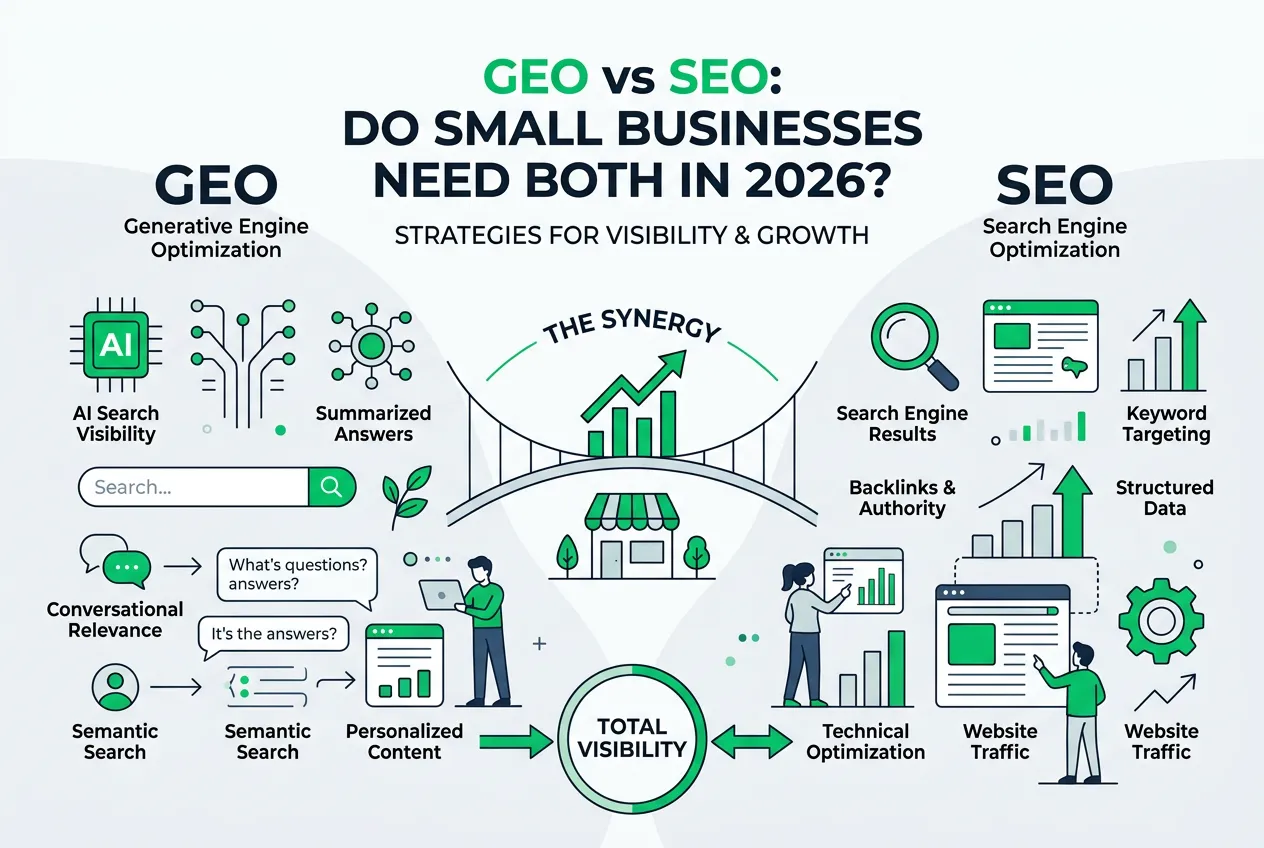
SEO (Search Engine Optimization) is the practice of optimizing your website so it ranks higher in traditional search results on Google, Bing, and similar platforms. Higher rankings drive more organic traffic to your site.
GEO (Generative Engine Optimization) is the practice of structuring your content so AI-powered tools—Google AI Overviews, ChatGPT, Perplexity, Copilot—cite or reference your business when answering relevant questions.
The core difference:
- SEO gets your website clicked
- GEO gets your business mentioned
Both drive awareness and leads. But they work differently, and in 2026, relying on SEO alone leaves a widening gap.
Why GEO Matters for Small Businesses Right Now
AI search is no longer a future trend. According to BrightEdge’s 2024 research, Google AI Overviews appear in roughly 84% of search queries. Meanwhile, ChatGPT surpassed 100 million weekly active users in late 2023, with that number continuing to climb.
Your customers are already asking AI tools questions like:
- “What’s the best plumber near me?”
- “Which accountant should I use for my small business?”
- “What should I look for in a local marketing agency?”
If your business isn’t structured to be cited in those answers, a competitor will be. Small businesses that ignore GEO now will face a steeper climb to catch up within 12 to 18 months.
How SEO and GEO Overlap—and Where They Diverge
The good news: strong SEO is the foundation of strong GEO. AI engines pull from credible, well-structured, clearly written content. If your website already ranks well, you have a head start.
Where they overlap:
- High-quality, specific content that answers real questions
- Fast, mobile-friendly website performance
- Strong backlink profiles and domain authority
- Structured data and schema markup
Where GEO requires extra focus:
- Answer-first writing. AI tools extract direct answers. If your content buries the point, it gets skipped. Lead every section with a clear, quotable sentence.
- Named entities. AI engines build associations between your business name, location, services, and reputation. Mention these explicitly throughout your content.
- Consistent citations across the web. Your business name, address, and phone number should match exactly across Google Business Profile, your website, directories, and review platforms.
- Conversational query alignment. GEO requires optimizing for full questions (“How much does a kitchen renovation cost in Austin?”), not just short keywords (“kitchen renovation Austin”).
A Real-World Example: Local Accountant, Two Different Outcomes
Consider two identical accounting firms in the same city. Both have professional websites. Both offer small business tax services.
Firm A optimized for SEO only—targeting keywords, building links, updating their Google Business Profile. They rank on page one for “small business accountant [city].”
Firm B did all of that, plus structured their service pages to answer direct questions (“What does a small business accountant charge per month?”), earned mentions in local business publications, and collected 40+ detailed Google reviews that name their specific services.
When a potential client asks ChatGPT, “Who is a good small business accountant in [city]?” Firm B gets cited. Firm A does not.
Same budget. Different results. The difference was content structure and off-site credibility signals that AI engines use to validate expertise.
Your GEO + SEO Action Checklist for 2026
Start here. These steps work for both strategies simultaneously:
- Audit your Google Business Profile. Fill every field. Add photos, services, and weekly posts. Respond to every review.
- Rewrite your top three service pages to lead with a direct answer to the most common customer question about that service.
- Add an FAQ section to each service page. Write one question per distinct customer intent. Keep every answer under 60 words.
- Check your NAP consistency. Your business name, address, and phone number must match exactly across every directory, your website, and social profiles.
- Get cited in credible local sources. A mention in a local business journal, a chamber of commerce listing, or a niche industry directory signals authority to AI engines.
- Target conversational queries. Use tools like Google’s “People Also Ask” or Answer The Public to find full-question keywords, then answer them directly on your site.
- Request specific reviews. Ask satisfied clients to mention your service type and location in their reviews. “Great accountant for small business tax prep in Denver” carries more GEO weight than “Highly recommend.”
Where to Start If You’re Doing This Alone
You don’t need to overhaul everything at once. Pick one service page, rewrite the opening paragraph to answer the most common client question directly, add five FAQ entries, and make sure your Google Business Profile is fully complete. That single page, done well, can start driving both search rankings and AI citations within 60 to 90 days.
If you want a faster path, an SEO and GEO audit identifies exactly where your visibility gaps are—and what to fix first. Book a free audit and get a prioritized action plan built for your specific business.
Frequently Asked Questions
Share this article
Follow us
A quick overview of the topics covered in this article.
- What Is the Difference Between SEO and GEO?
- Why GEO Matters for Small Businesses Right Now
- How SEO and GEO Overlap—and Where They Diverge
- A Real-World Example: Local Accountant, Two Different Outcomes
- Your GEO + SEO Action Checklist for 2026
- Where to Start If You’re Doing This Alone
Latest articles
June 24, 2026
June 21, 2026

April 20, 2026
Latest Articles & Insights
Actionable insights on SEO, web design, and digital growth—focused on what works to drive traffic, leads, and real results.
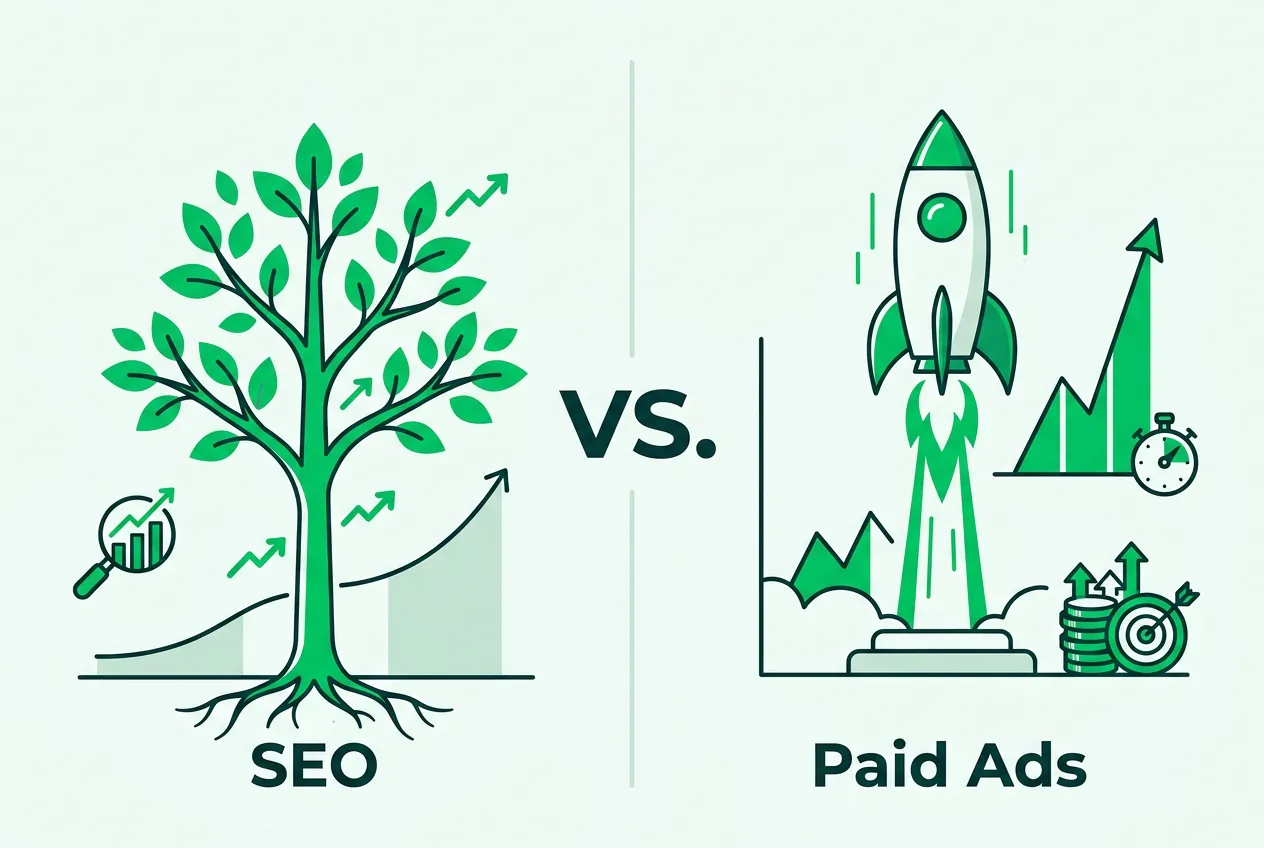
SEO vs. Paid Ads: Which Grows a Small Business Faster?
June 29, 2026
6 min
Quick answer: Paid ads generate traffic within hours of launch. SEO takes three to six months ...
SEO for CCTV Companies in Saudi Arabia
June 24, 2026
6 min
Quick answer: SEO for CCTV companies in Saudi Arabia means optimizing your website to rank for ...
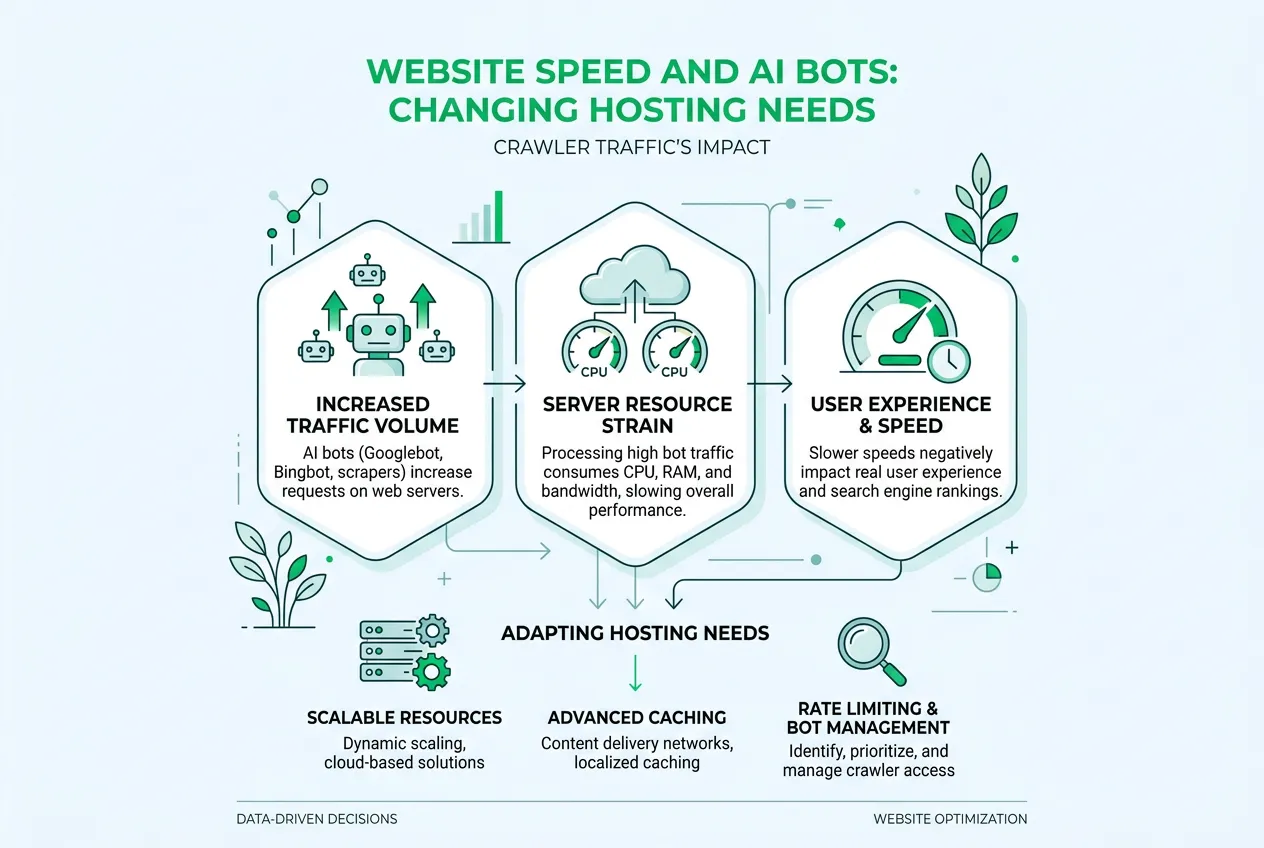
Website speed and AI bots: how crawler traffic is changing hosting needs
June 22, 2026
6 min
Quick answer: AI crawlers from companies like OpenAI, Anthropic, and Google now make up a large ...
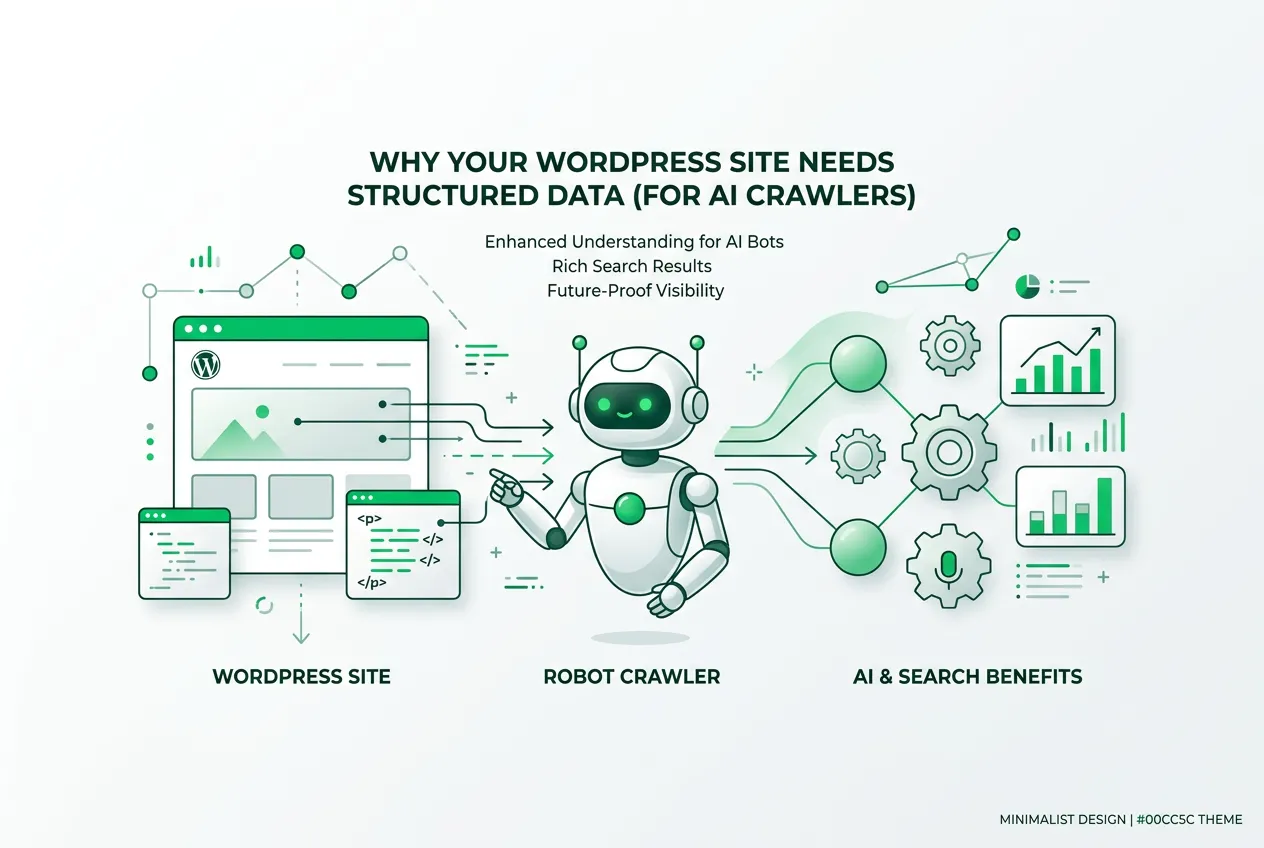
Why your WordPress site needs structured data more than ever (for AI crawlers)
June 21, 2026
5 min
Quick answer: Structured data is code that tells AI crawlers exactly what your content means. Without ...