
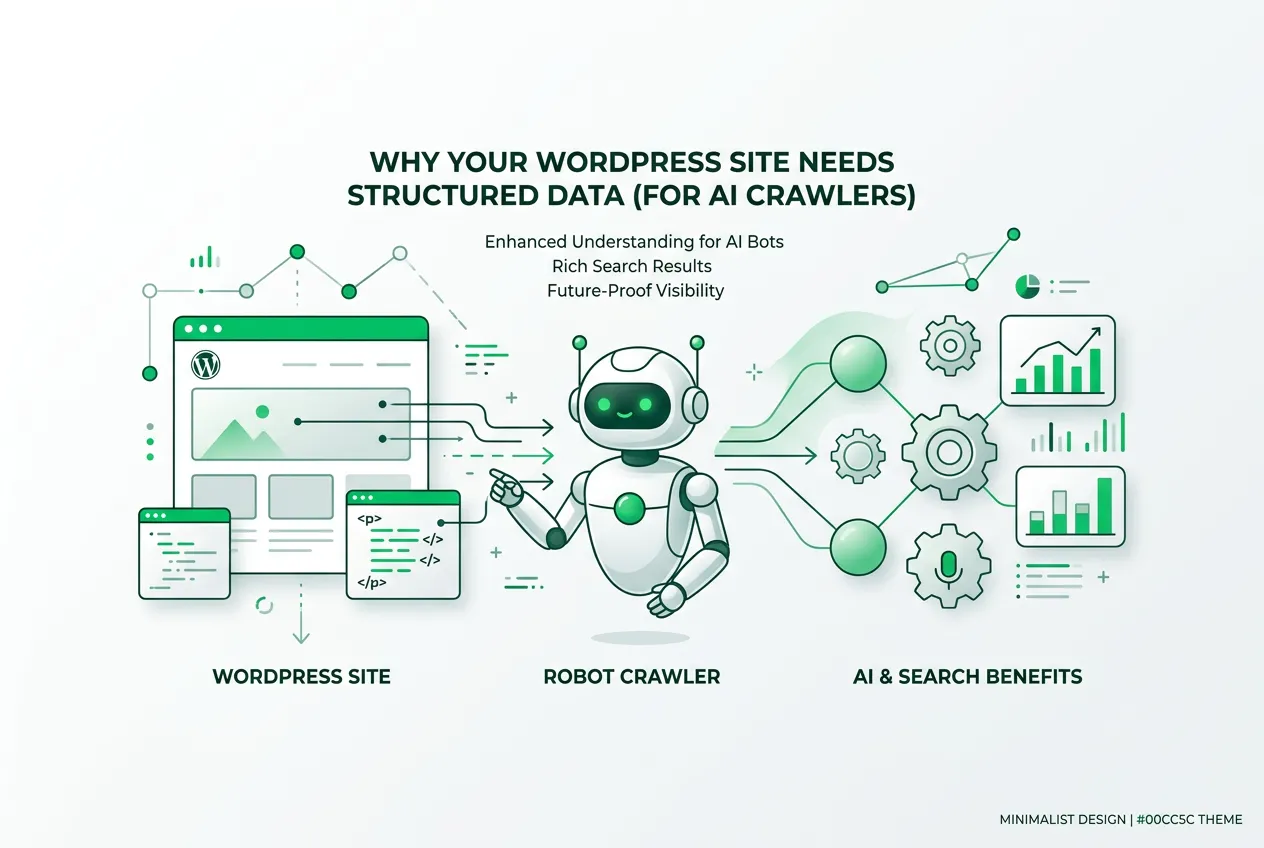
Quick answer: Structured data is code that tells AI crawlers exactly what your content means. Without it, AI engines like ChatGPT, Perplexity, and Google’s AI Overviews struggle to read your WordPress site, summarize it, and cite it. Adding structured data makes your content machine-readable—so it gets found, quoted, and clicked.
Your WordPress site is live. Your content is solid. But AI search engines can’t make sense of it.
That’s the problem. And it’s growing fast.
Why structured data matters more in 2026
Search isn’t just Google anymore. People ask ChatGPT for recommendations. They run product research through Perplexity. They get answers from Google’s AI Overviews without ever clicking a link.
These AI engines don’t read your site like a human does. They scan it for signals. Structured data is the clearest signal you can send.
Here’s the shift you can’t ignore:
- AI-driven search results are eating traditional clicks. Zero-click searches now dominate, which means your content has to be the answer the AI pulls from.
- Ad costs keep climbing. Organic visibility through AI citation is becoming the cheaper, more durable channel.
- Attention is scarce. AI engines reward content they can parse instantly—and skip the rest.
For small businesses, this is a rare opening. The big players are slow to adapt. You can move faster.
What is structured data, in plain terms?
Structured data is a standardized code format that labels the parts of your content for machines.
Think of it as a set of tags behind the scenes. One tag says “this is a product.” Another says “this is the price.” Another says “this is a customer review with a 5-star rating.” Humans don’t see these tags. Crawlers do.
The most common format is called schema markup, built on a shared vocabulary at Schema.org. When you add schema to a page, you’re translating your content into a language AI crawlers understand without guessing.
No schema means the AI has to guess. Guessing leads to mistakes—or worse, getting skipped entirely.
How structured data helps AI crawlers cite your content
AI engines pull from sources they can read clearly and trust quickly. Structured data does both.
When your WordPress pages carry the right schema, you make it easy for AI to:
- Understand context fast. The crawler knows whether a page is an article, a recipe, a product, or a local business listing.
- Extract specific facts. Prices, dates, ratings, author names, and FAQs get pulled accurately instead of misread.
- Surface in rich results. Star ratings, FAQ dropdowns, and featured snippets all rely on schema.
- Trust the source. Clear author and organization data signals credibility, which AI engines weigh heavily.
Content that’s easy to parse gets cited. Content that’s ambiguous gets ignored.
Which schema types matter most for your WordPress site
You don’t need every schema type. You need the ones tied to your business goals.
Start with these:
- Organization schema — tells AI who you are, where you’re located, and how to contact you.
- Article or BlogPosting schema — helps your blog content get picked up and attributed correctly.
- FAQ schema — one of the highest-value types for AI citation, since engines love clean question-answer pairs.
- Product schema — for any pages selling something, including price, availability, and reviews.
- LocalBusiness schema — essential if you serve a specific area and want to show up in local AI answers.
Pick the types that match what you offer. Then apply them consistently across your pages.
A quick example: the FAQ schema win
Here’s a realistic scenario.
A small accounting firm runs a WordPress blog. One post answers common tax questions for freelancers. Good content—but buried on page two of Google and invisible to AI engines.
The firm adds FAQ schema to the post. Each question and answer gets tagged so crawlers can read them cleanly.
Within weeks, two things happen. The page starts appearing in Google’s FAQ rich results. And a Perplexity answer about freelancer taxes begins citing the firm by name.
Same content. Same page. The only change was making it machine-readable. That’s the leverage structured data gives you.
How to add structured data to WordPress today
You don’t need to be a developer. WordPress makes this manageable.
Use this checklist to get started:
- Audit what you have. Run your key pages through Google’s Rich Results Test to see if any schema already exists.
- Install a schema plugin. Tools like Yoast SEO, Rank Math, or Schema Pro generate markup without code.
- Add Organization schema first. Set up your business name, logo, and contact details site-wide.
- Tag your top blog posts. Apply Article schema to your highest-traffic content.
- Add FAQ schema to question-heavy pages. This is your fastest path to AI citation.
- Mark up product and service pages. Include prices, availability, and reviews where relevant.
- Validate everything. Re-test each page to confirm the markup is error-free.
- Keep it current. Update schema when prices, hours, or details change.
Work through this list one page at a time. Start with the pages that already get traffic.
Make your content the answer AI engines pick
AI search rewards clarity. Structured data is how you deliver it.
Your competitors are still treating their WordPress sites like it’s 2018—built for human eyes only. That’s your advantage. Add the schema. Make your content readable to the machines deciding who gets cited.
Not sure where your site stands? Start with a structured data audit. Run your top pages through a schema validator, fix the gaps, and watch how AI engines start treating your content differently.
Frequently Asked Questions
Share this article
Follow us
A quick overview of the topics covered in this article.
- Why structured data matters more in 2026
- What is structured data, in plain terms?
- How structured data helps AI crawlers cite your content
- Which schema types matter most for your WordPress site
- A quick example: the FAQ schema win
- How to add structured data to WordPress today
- Make your content the answer AI engines pick
Latest articles

June 24, 2026
June 21, 2026

April 20, 2026

Latest Articles & Insights
Actionable insights on SEO, web design, and digital growth—focused on what works to drive traffic, leads, and real results.
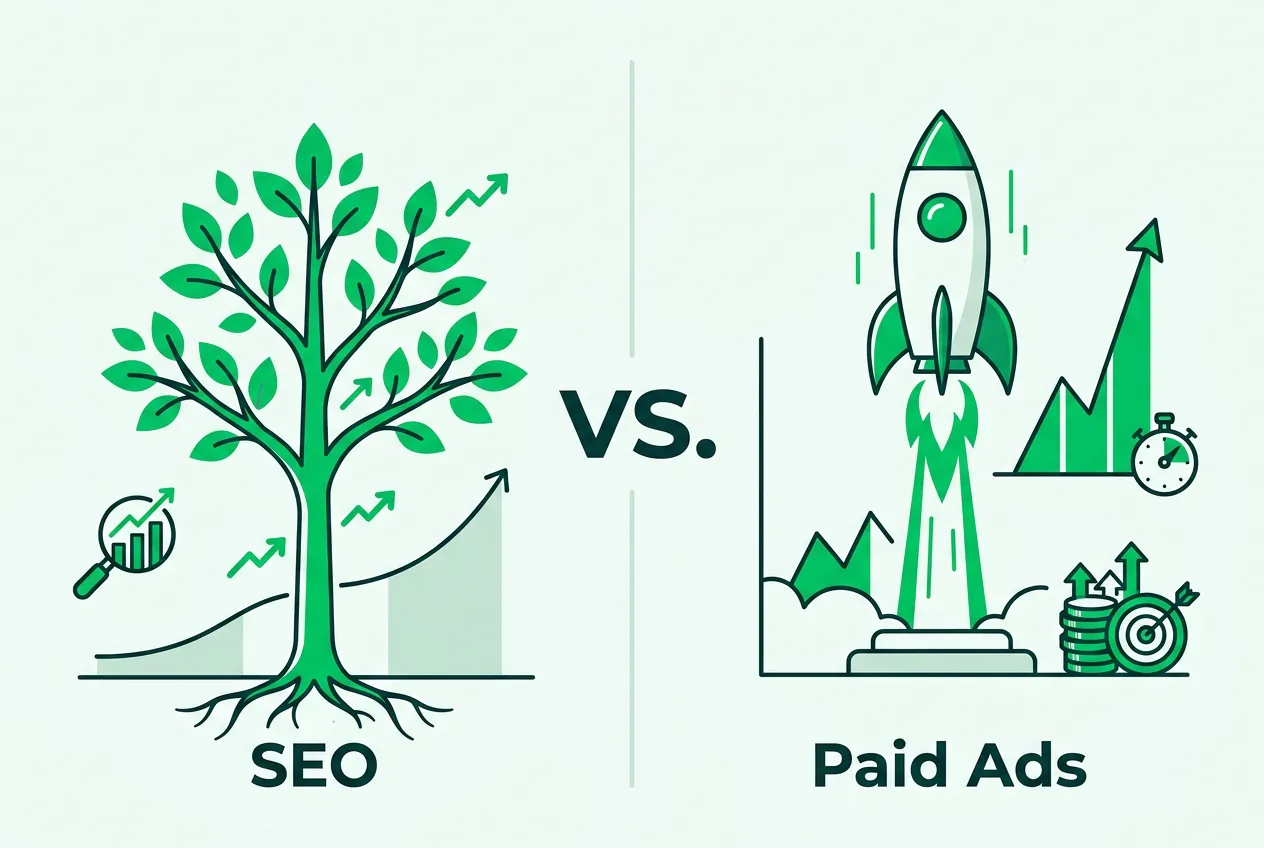
SEO vs. Paid Ads: Which Grows a Small Business Faster?
June 29, 2026
6 min
Quick answer: Paid ads generate traffic within hours of launch. SEO takes three to six months ...
SEO for CCTV Companies in Saudi Arabia
June 24, 2026
6 min
Quick answer: SEO for CCTV companies in Saudi Arabia means optimizing your website to rank for ...
Website speed and AI bots: how crawler traffic is changing hosting needs
June 22, 2026
6 min
Quick answer: AI crawlers from companies like OpenAI, Anthropic, and Google now make up a large ...
Why your WordPress site needs structured data more than ever (for AI crawlers)
June 21, 2026
5 min
Quick answer: Structured data is code that tells AI crawlers exactly what your content means. Without ...