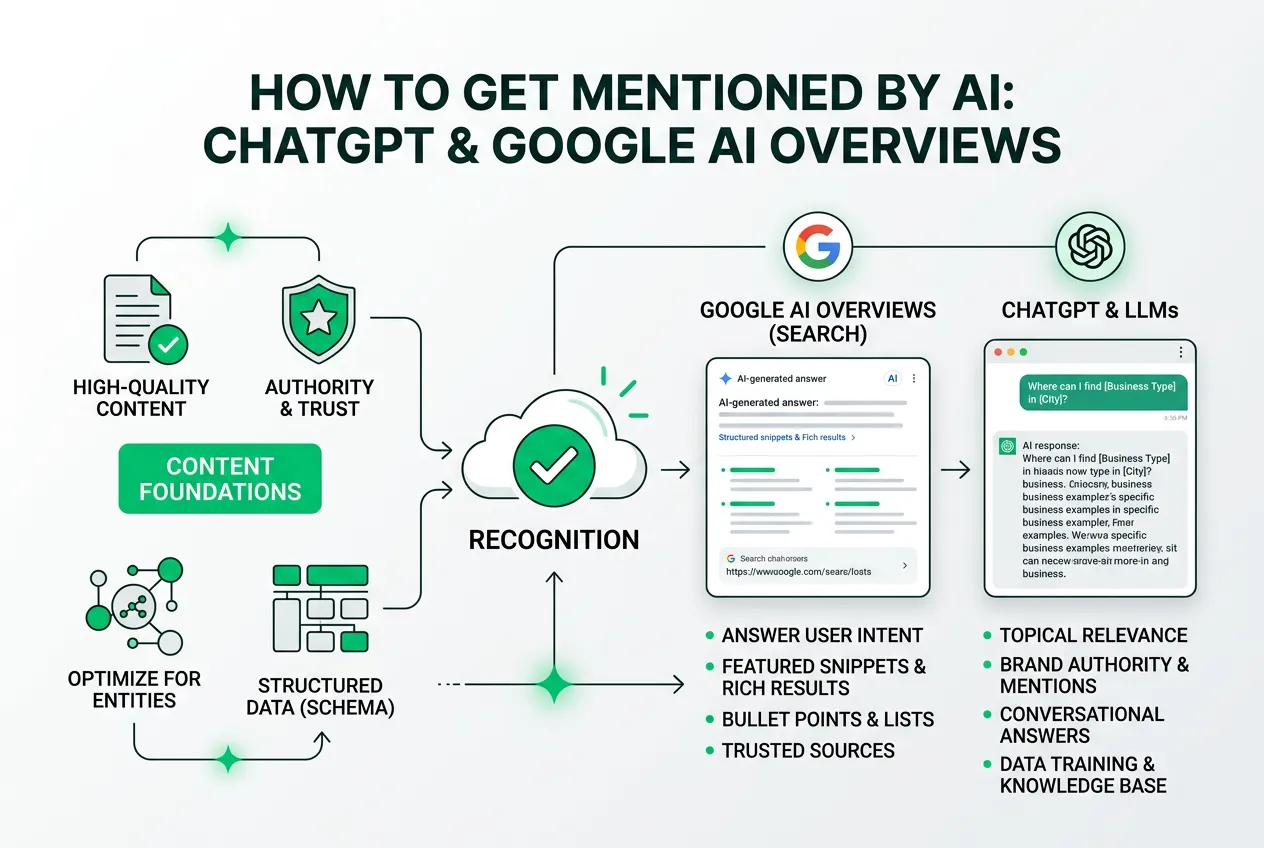
Quick answer: To get mentioned by ChatGPT and Google AI Overviews, publish clear, factual content that directly answers customer questions, earn citations from trusted sites, keep your business listings consistent, and structure pages with FAQs and schema markup. AI engines pull from sources they can read, trust, and verify.
Your customers are asking AI for recommendations. ChatGPT, Google AI Overviews, and Perplexity now answer questions that used to start with a Google search. The problem? If your business isn’t in those answers, you’re invisible.
This matters more in 2026 than ever. Google AI Overviews now appear on a huge share of searches, pushing traditional blue links further down the page. Ad costs keep climbing. Attention keeps shrinking. Meanwhile, a single mention inside an AI answer can put your business in front of a buyer at the exact moment they’re deciding.
Here’s the good news. Getting cited by AI isn’t luck. It follows patterns you can influence. Below are the strategies that actually move the needle—plus a checklist you can start today.
Why do AI engines mention some businesses and not others?
AI engines mention businesses they can read, trust, and verify. They don’t invent recommendations out of thin air. They pull from web pages, reviews, directories, and structured data they’ve already indexed.
Three factors decide whether you show up:
- Clarity: Your content directly answers the question being asked.
- Authority: Other trusted sites mention or link to your business.
- Consistency: Your name, services, and details match everywhere online.
Miss any one of these, and you become harder to cite. Nail all three, and you become the obvious source.
How do you write content that AI engines actually cite?
Write content that answers one question per page—completely and directly. AI engines extract clean, self-contained answers. Vague, rambling content gets skipped.
Start each page or section with a direct answer. Put the conclusion first, then explain. This mirrors how AI Overviews are built: a short summary up top, details below.
A few rules that help:
- Lead with the answer. State it in the first two sentences, before any background.
- Use plain language. Write for a customer, not a search algorithm.
- Name things explicitly. Say “Acme Plumbing offers emergency repairs” instead of “We offer them.”
- Add FAQs. Question-and-answer formats are easy for AI to lift and cite.
- Back claims with specifics. Numbers, dates, and named sources beat generic statements.
Generic, AI-sounding content underperforms. One specific detail—a real result, a price range, a local stat—makes your page worth quoting.
Does schema markup help you get into AI Overviews?
Yes. Schema markup helps AI engines understand exactly what your page is about. It’s structured code that labels your content—your business name, address, services, FAQs, and reviews—in a format machines read instantly.
You don’t need to be a developer. Most website platforms and SEO plugins add schema with a few clicks. Focus on these types:
- Organization schema for your business identity.
- LocalBusiness schema for your location and hours.
- FAQ schema for question-and-answer sections.
- Review schema for ratings and testimonials.
Schema won’t guarantee a mention. But it removes guesswork for the machine reading your site. Make it easy to be understood.
How do you build the authority AI engines trust?
AI engines trust businesses that other trusted sources talk about. Citations and mentions across the web act as votes of confidence. The more reputable sites that reference you, the more likely you are to surface in an answer.
Build that authority with deliberate moves:
- Get listed in relevant directories. Industry sites, local chambers, and review platforms all count.
- Earn press and guest mentions. A quote in an industry article carries weight.
- Collect reviews. Google, Yelp, and niche platforms feed AI’s understanding of your reputation.
- Keep listings consistent. Same name, same address, same phone—everywhere.
Inconsistent details confuse AI engines. A business with three different phone numbers across the web looks unreliable. Fix the basics first.
A mini case study: how one local business cracked AI Overviews
Picture a regional accounting firm with a solid website that no AI engine ever mentioned. The owner kept hearing prospects say, “I asked ChatGPT for an accountant and you didn’t come up.”
The fix took three steps over six weeks:
- Rewrote service pages to answer specific questions like “How much does small business tax prep cost in Austin?”—with real price ranges.
- Added FAQ schema to every service page.
- Cleaned up listings across Google Business Profile, three directories, and two review sites so every detail matched.
The result? Within two months, the firm started appearing in AI answers for local accounting queries—and reported a steady rise in “found you through ChatGPT” inquiries. No ad spend. Just structure, clarity, and consistency.
That’s the pattern. It’s repeatable.
Your action checklist: get AI-ready today
Start here. None of these require a big budget.
- Pick one core question your customers ask, and write a page that answers it directly.
- Open every key page with a two-sentence direct answer.
- Add an FAQ section with 5 real customer questions.
- Install schema markup (Organization, LocalBusiness, FAQ).
- Audit your business listings—make every detail match.
- Claim and optimize your Google Business Profile.
- Ask happy customers for reviews on Google and one industry platform.
- Add one specific detail to your top pages: a price, a stat, a real result.
Knock out three of these this week. Momentum builds fast.
Want to know where you stand?
Most businesses have no idea whether AI engines can find them. That’s the first thing worth fixing.
Get an AI visibility audit. We’ll check how ChatGPT and Google AI Overviews see your business, where you’re getting skipped, and what to fix first. No jargon. Just a clear plan.
Frequently Asked Questions
Share this article
Follow us
A quick overview of the topics covered in this article.
- Why do AI engines mention some businesses and not others?
- How do you write content that AI engines actually cite?
- Does schema markup help you get into AI Overviews?
- How do you build the authority AI engines trust?
- A mini case study: how one local business cracked AI Overviews
- Your action checklist: get AI-ready today
- Want to know where you stand?
Latest articles

June 24, 2026
June 21, 2026

April 20, 2026

Latest Articles & Insights
Actionable insights on SEO, web design, and digital growth—focused on what works to drive traffic, leads, and real results.
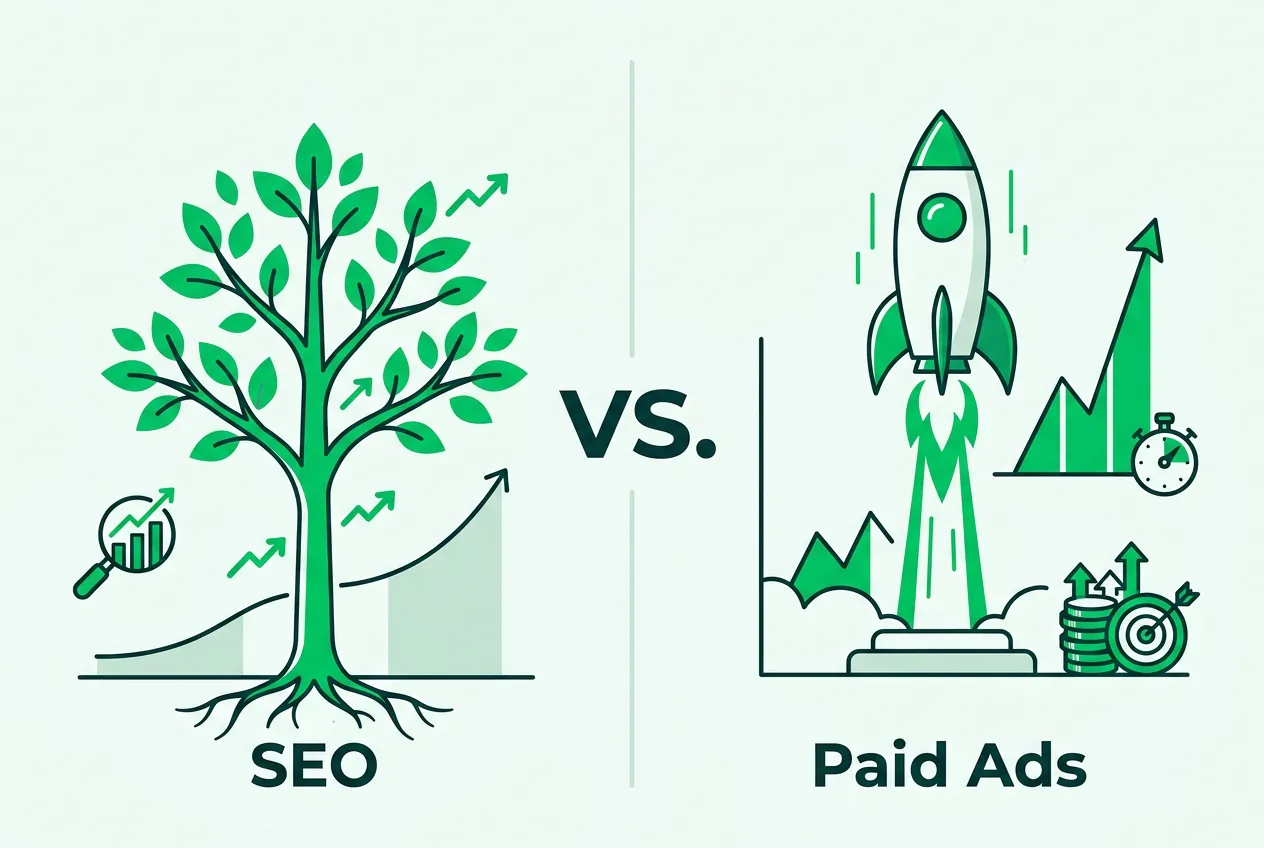
SEO vs. Paid Ads: Which Grows a Small Business Faster?
June 29, 2026
6 min
Quick answer: Paid ads generate traffic within hours of launch. SEO takes three to six months ...
SEO for CCTV Companies in Saudi Arabia
June 24, 2026
6 min
Quick answer: SEO for CCTV companies in Saudi Arabia means optimizing your website to rank for ...
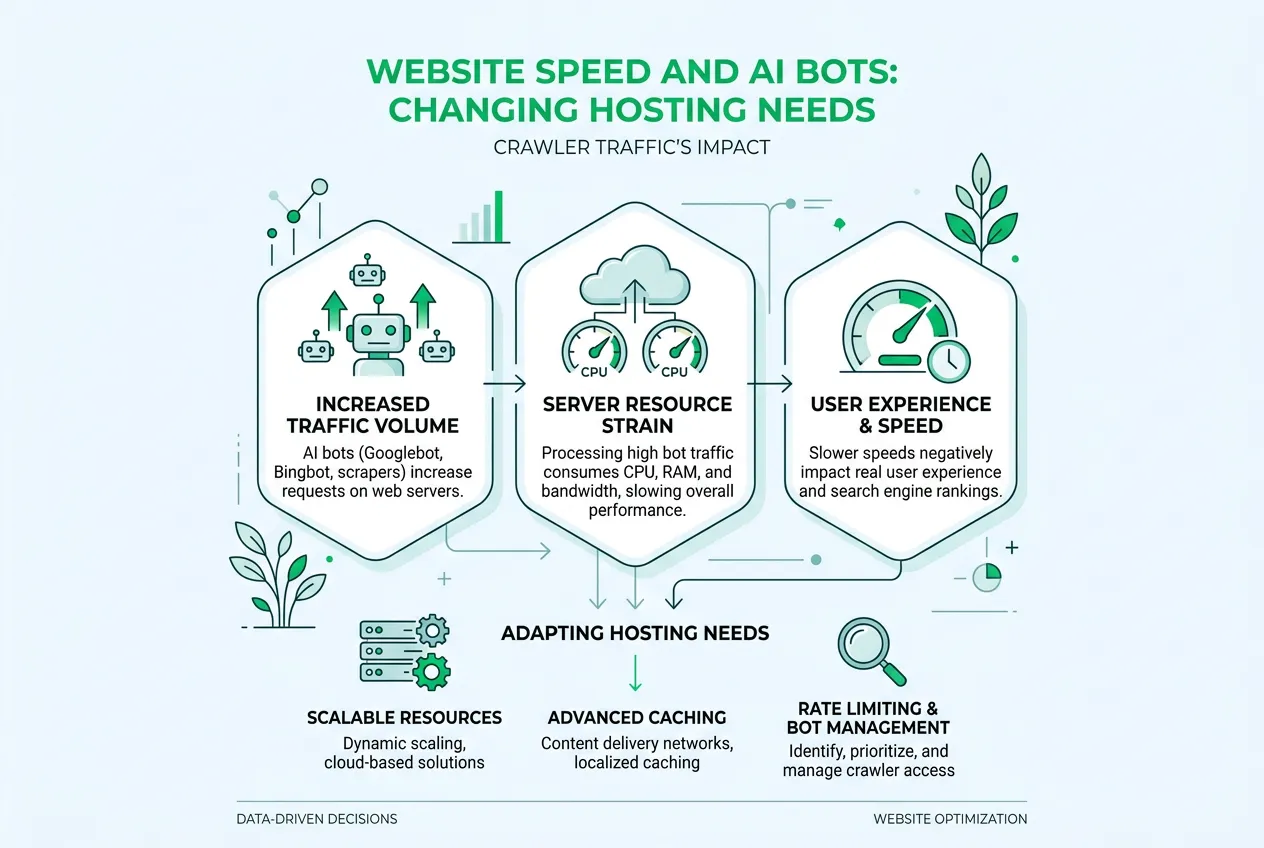
Website speed and AI bots: how crawler traffic is changing hosting needs
June 22, 2026
6 min
Quick answer: AI crawlers from companies like OpenAI, Anthropic, and Google now make up a large ...
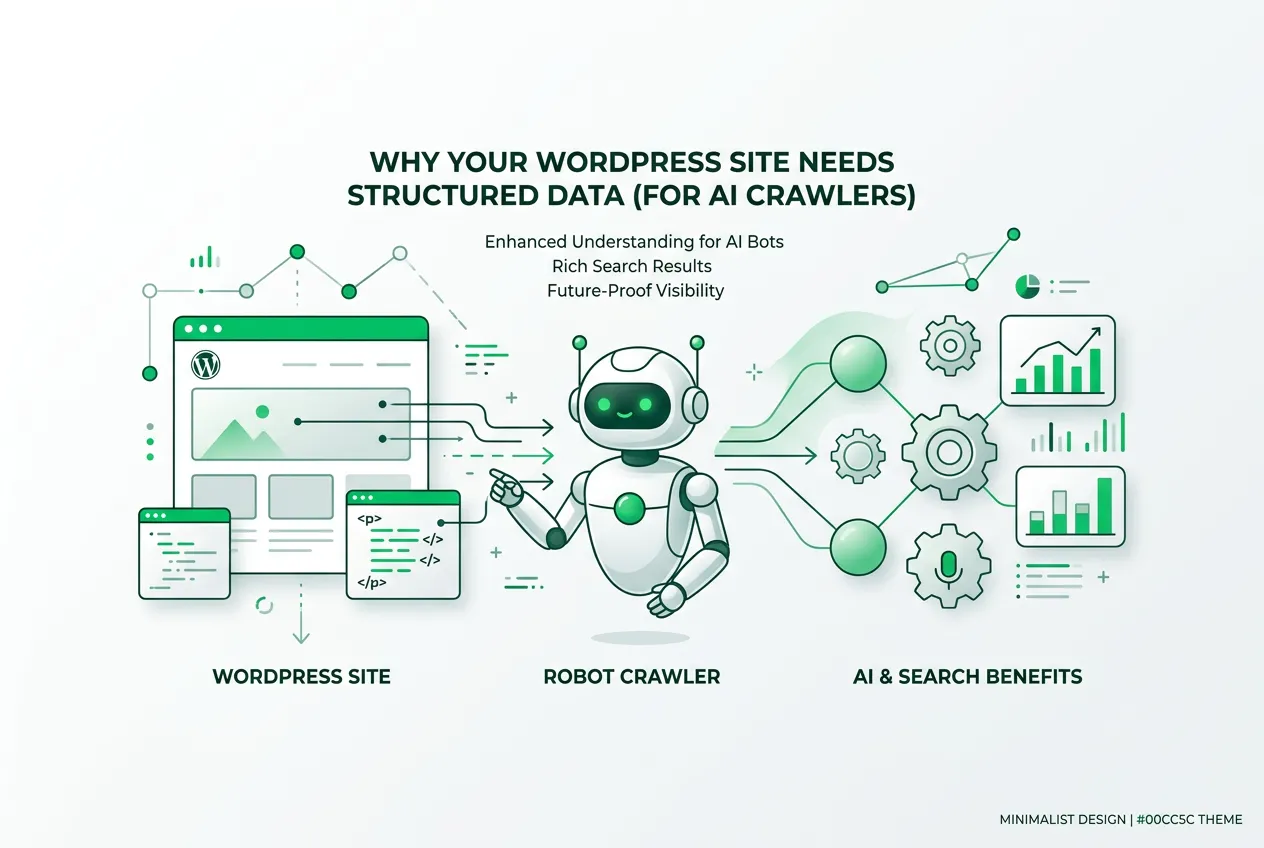
Why your WordPress site needs structured data more than ever (for AI crawlers)
June 21, 2026
5 min
Quick answer: Structured data is code that tells AI crawlers exactly what your content means. Without ...